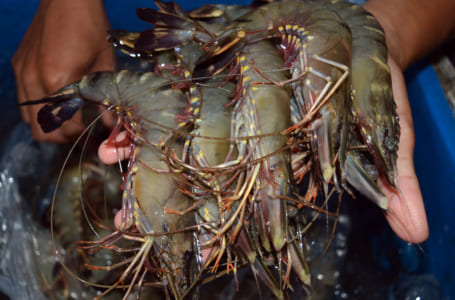
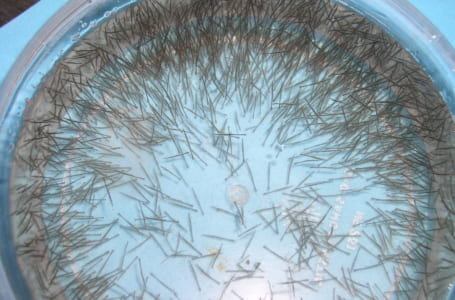
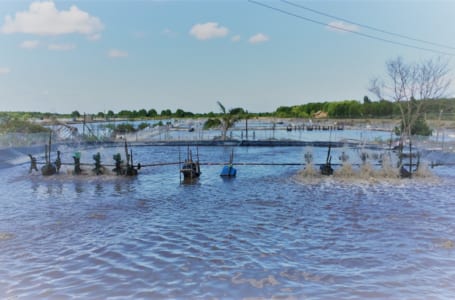
Những lưu ý khi nuôi tôm lót bạt nền đáy để nâng cao hiệu quả
- Ultimate endurance test for any astronaut exploring distant cosmic frontiers
- The Critical Role of Navigation and Obstacle Avoidance
- The Significance of Predictive Modeling
- The Science of Star Collection and Score Maximization
- Optimizing Collection Routes for Efficiency
- The Physiological and Psychological Demands of Prolonged Space Travel
- Countermeasures for Maintaining Health in Space
- The Evolution of Spacecraft Design and Shielding Technologies
- Beyond Survival: The Future of Astronaut Endurance
Ultimate endurance test for any astronaut exploring distant cosmic frontiers
The vastness of space has always captivated humanity, fueling dreams of exploration and discovery. At the heart of this pursuit is the figure of the astronaut, a highly trained individual tasked with venturing beyond our planet and into the unknown. This demanding role requires not only exceptional physical and mental fortitude but also the ability to adapt to extremely challenging and unpredictable environments. The challenges faced by those who travel to the cosmos are multifaceted, ranging from the physiological effects of prolonged spaceflight to the ever-present dangers of cosmic radiation and micrometeoroid impacts.
Modern space exploration isn't solely about reaching new destinations; it is increasingly focused on endurance and sustained presence. This shift in focus necessitates crewed missions that last for months, even years. Therefore, the ability to maintain peak performance and psychological well-being during these extended periods is paramount. Simulations and training exercises are crucial in preparing individuals for the isolation, confinement, and potential hazards they’ll encounter on long-duration missions. The modern space traveler is more than simply a pilot or a scientist; they are a resilient explorer, a problem-solver, and a living testament to human adaptability.
The Critical Role of Navigation and Obstacle Avoidance
Successfully navigating the complexities of space relies heavily on precise trajectory calculations, efficient propulsion systems, and, crucially, robust obstacle avoidance strategies. A spacecraft, or even a lone space walker, must be able to accurately determine its position and velocity while simultaneously identifying and maneuvering around potential hazards. These hazards include asteroids, space debris, and even naturally occurring micrometeoroid streams. The consequences of a collision, even with a small piece of debris, can be catastrophic, potentially leading to mission failure or even loss of life. Advanced sensor technologies, such as radar, lidar, and optical telescopes, play a vital role in detecting and tracking these objects. Automated systems are often employed to provide warnings and even initiate evasive maneuvers, but the astronaut must ultimately remain in control, capable of overriding automated systems when necessary.
The Significance of Predictive Modeling
Predictive modeling has become an indispensable tool in space navigation. By analyzing the orbits of known objects and employing statistical algorithms, mission control can forecast potential collision risks and proactively adjust trajectories to avoid them. This involves accurately modeling the gravitational forces exerted by various celestial bodies, as well as accounting for the effects of solar radiation pressure and other perturbing influences. The accuracy of these models is constantly being refined through ongoing observation and data analysis. Furthermore, real-time data feeds from ground-based tracking stations and onboard sensors provide crucial updates that allow for dynamic adjustments to the flight path.
| Asteroid | 1 meter – 1 kilometer+ | 11 km/s – 72 km/s | Trajectory alteration, shielding |
| Space Debris | 1 cm – several meters | 8 km/s – 18 km/s | Maneuvering, debris tracking & avoidance |
| Micrometeoroid | Dust grain – 1 cm | Variable | Shielding, redundancy in critical systems |
| Solar Flare | N/A | N/A | Radiation shielding, storm shelters |
The data contained in the table above provides a simplified overview of common space hazards and the strategies employed to mitigate their risks. Each hazard requires a highly tailored approach to ensure the safety of spacecraft and astronauts.
The Science of Star Collection and Score Maximization
Within the context of a simulated space environment, the collection of stars often serves as a central game mechanic, representing progress and rewarding skillful navigation. This concept, while fictional, draws inspiration from the real-world goals of astronomical observation and resource acquisition. The act of ‘collecting’ stars can be interpreted as a metaphor for gathering scientific data, identifying valuable resources (like rare isotopes), or simply achieving milestones in a long-term exploration mission. Strategic planning is key to maximizing a score; efficient routes that minimize travel time while maximizing star density are paramount. Furthermore, a keen awareness of the surrounding environment is crucial to avoid collisions with obstacles while simultaneously pursuing scoring opportunities. It replicates the delicate balance between risk and reward that defines real space missions.
Optimizing Collection Routes for Efficiency
Efficient star collection requires a strategy that prioritizes both speed and safety. A simple linear approach is rarely optimal, as it may involve excessive backtracking or expose the spacecraft to unnecessary risks. More effective strategies often involve identifying ‘star clusters’ or regions of high star density and planning routes that allow for rapid traversal of these areas. Furthermore, the use of momentum and gravitational assists can help to conserve fuel and accelerate travel times. In a game setting, this might translate to implementing algorithms that dynamically calculate the shortest and safest path to the nearest star cluster, taking into account the position of obstacles and the spacecraft’s current velocity. This encourages players to think strategically and optimize their movements.
- Prioritize routes with high star density.
- Utilize momentum for faster travel.
- Plan for gravitational assists (where applicable).
- Constantly scan for and avoid obstacles.
- Optimize fuel usage for long-duration runs.
The above list represents a concise guide to optimizing star collection strategies. Successful execution of these principles will significantly enhance a player's score and overall performance.
The Physiological and Psychological Demands of Prolonged Space Travel
The human body isn’t naturally adapted for the harsh conditions of space. Prolonged exposure to microgravity leads to bone density loss, muscle atrophy, and cardiovascular deconditioning. The lack of a natural day-night cycle disrupts circadian rhythms, leading to sleep disturbances and reduced cognitive function. Furthermore, the constant exposure to radiation increases the risk of cancer and other health problems. These physiological challenges are compounded by the psychological stresses of isolation, confinement, and the inherent risks of space travel. Maintaining mental well-being is just as crucial as maintaining physical health. Astronauts must be equipped with strategies for coping with stress, managing emotions, and maintaining positive relationships with their crewmates.
Countermeasures for Maintaining Health in Space
Researchers and engineers are actively developing countermeasures to mitigate the negative effects of space travel on the human body. Regular exercise using specialized equipment helps to combat muscle atrophy and bone density loss. Pharmacological interventions can help to regulate circadian rhythms and counteract the effects of radiation. Furthermore, advanced life support systems are designed to provide a controlled environment that minimizes exposure to harmful substances and maintains optimal atmospheric conditions. Psychological support, including real-time communication with family and friends, as well as onboard counseling services, is also essential for maintaining mental well-being. Virtual reality technology is increasingly being used to provide immersive experiences that can help to combat boredom and isolation.
- Regular exercise is vital for maintaining muscle mass and bone density.
- Pharmacological interventions can help regulate circadian rhythms.
- Advanced life support systems maintain a safe environment.
- Psychological support reduces stress and isolation.
- Virtual reality can offer immersive and engaging experiences.
Implementing these countermeasures is essential for ensuring the long-term health and safety of astronauts on extended missions. Ongoing research continues to refine and improve these strategies, paving the way for more ambitious and sustainable space exploration endeavors.
The Evolution of Spacecraft Design and Shielding Technologies
The design of spacecraft has undergone a remarkable evolution since the early days of space exploration. Early spacecraft were primarily focused on simply achieving orbit and returning safely to Earth. However, as missions have become more complex and long-duration, spacecraft design has had to adapt to address a wider range of challenges. Modern spacecraft incorporate advanced materials, redundant systems, and sophisticated shielding technologies to protect astronauts and equipment from the harsh environment of space. Lightweight materials, such as carbon fiber composites, reduce overall mass, while advanced insulation materials protect against extreme temperatures. Redundant systems ensure that critical functions can continue to operate even in the event of a component failure.
Shielding technologies are crucial for protecting against radiation and micrometeoroid impacts. Radiation shielding typically involves incorporating layers of dense materials, such as aluminum or polyethylene, to absorb or deflect harmful particles. Micrometeoroid shielding often involves multiple layers of spaced-apart materials, which help to break up incoming particles and dissipate their energy. The development of self-healing materials is a promising area of research that could significantly enhance the durability and resilience of spacecraft. Innovative use of water as shielding, integrating it into the spacecraft's structure, is also being explored.
Beyond Survival: The Future of Astronaut Endurance
The focus of astronaut endurance is shifting beyond merely surviving the challenges of space travel to thriving in that environment. The next generation of space explorers will not only need to adapt to the physical and psychological stresses of prolonged spaceflight, but also be equipped to perform complex tasks, conduct scientific research, and even establish self-sufficient habitats on other planets. This requires a holistic approach to training and preparation, encompassing not only technical skills but also adaptability, resilience, and resourcefulness. Imagine a future where an astronaut, departing for Mars, is pre-equipped with tools to 3D-print replacement parts or even construct habitats using locally sourced materials.
Furthermore, the development of advanced artificial intelligence (AI) and robotics will play a crucial role. AI-powered systems can assist astronauts with a wide range of tasks, from monitoring life support systems to performing complex experiments. Robots can be deployed to explore hazardous environments or perform tasks that are too dangerous for humans. These technologies will not replace astronauts, but rather augment their capabilities and allow them to focus on the most challenging and critical aspects of their mission. The ultimate goal is to create a synergistic partnership between humans and machines, enabling us to push the boundaries of space exploration and establish a permanent human presence beyond Earth.